Why Does Ink Spread on Some Chinese Paintings, But Not Others?
Two sheets of the same paper — one lets ink bloom freely, the other holds every line exactly in place.
Look closely at traditional Chinese ink paintings and you'll notice something strange: some have soft, spreading edges where the ink seems to breathe into the paper. Others have crisp, exact lines that never bled at all — even where colours meet.
Both are painted on the same material: xuan paper (宣纸), the traditional paper of Chinese ink painting. It's not simply generic "rice paper" — authentic xuan paper is traditionally made from the bark of the wingceltis tree and rice straw, through a hand process that can take over a year, and UNESCO recognized the craft in 2009 for its rare ability to absorb water and hold ink at once.
But xuan paper isn't one uniform surface. Among its different preparations, two are especially important for understanding how Chinese painting behaves — raw xuan and sized xuan — and the difference between them decides how the ink will travel before the brush even touches the page.
生宣 (raw xuan paper) is untreated — just paper, highly absorbent. The moment ink touches it, it spreads, blooms, and settles into the fibers on its own terms. There's no taking it back.
熟宣 (sized xuan paper) has been treated with a sizing solution traditionally made from glue and alum (胶矾水), which seals the fibers and greatly reduces how much they absorb. Ink no longer spreads freely — it stays close to where the brush places it, letting color be built up in careful, controlled layers.
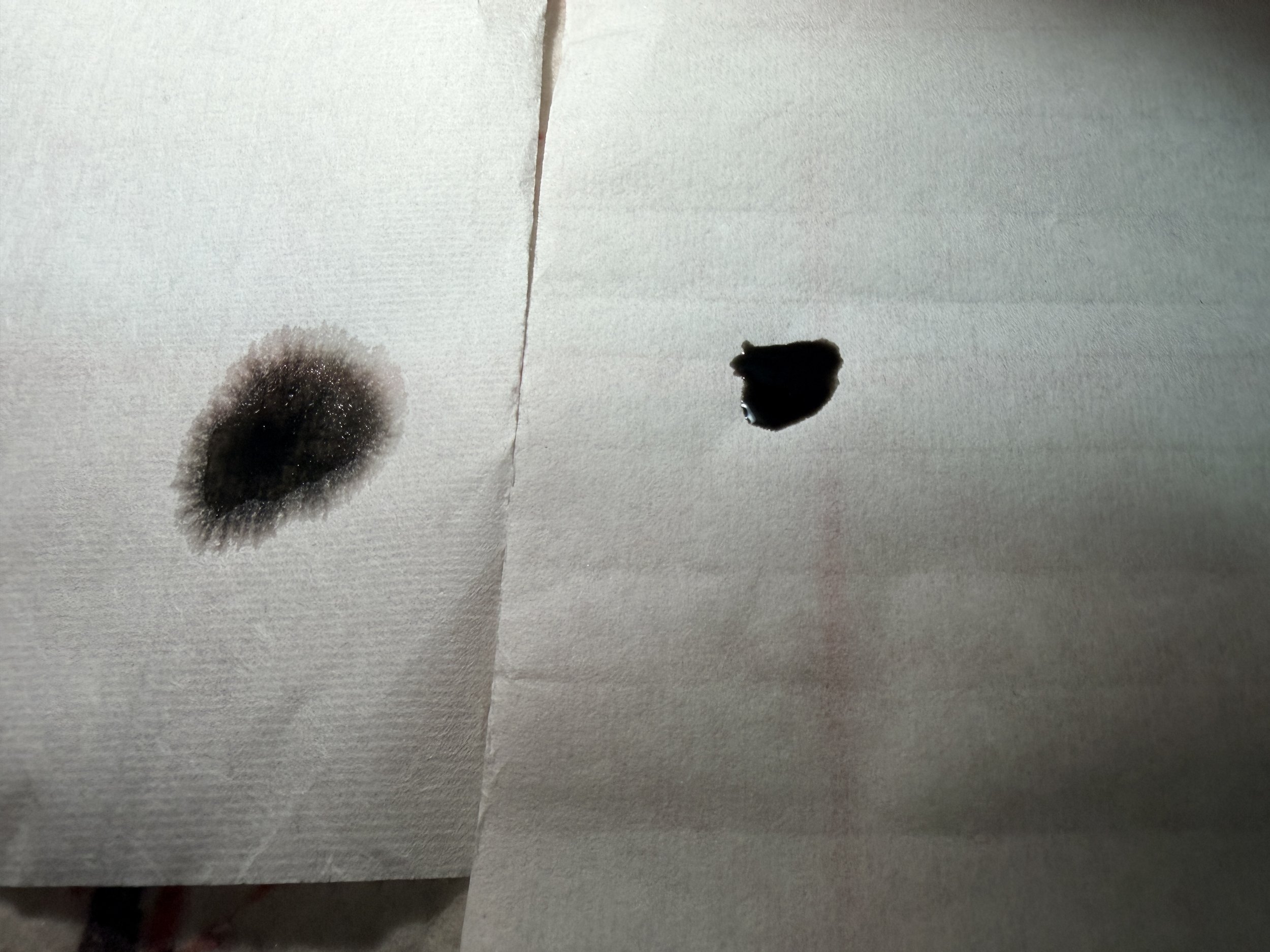
Left: ink blooms into raw Xuan.
Right: ink remains contained on sized Xuan.
Same paper family. Two completely different relationships between ink and surface.
This difference helps explain why different painting styles generally favour different preparations of xuan paper.
写意 (xieyi) — expressive, freehand brushwork — is commonly painted on raw paper. The ink is allowed to move and spread, reacting the moment the brush touches down; there's no correcting a stroke once it's made.
Allowing the ink to spread does not mean abandoning control. The painter must judge the moisture in the brush, the amount of water already held by the paper, and the balance between dark and pale ink — all before the stroke has finished moving.
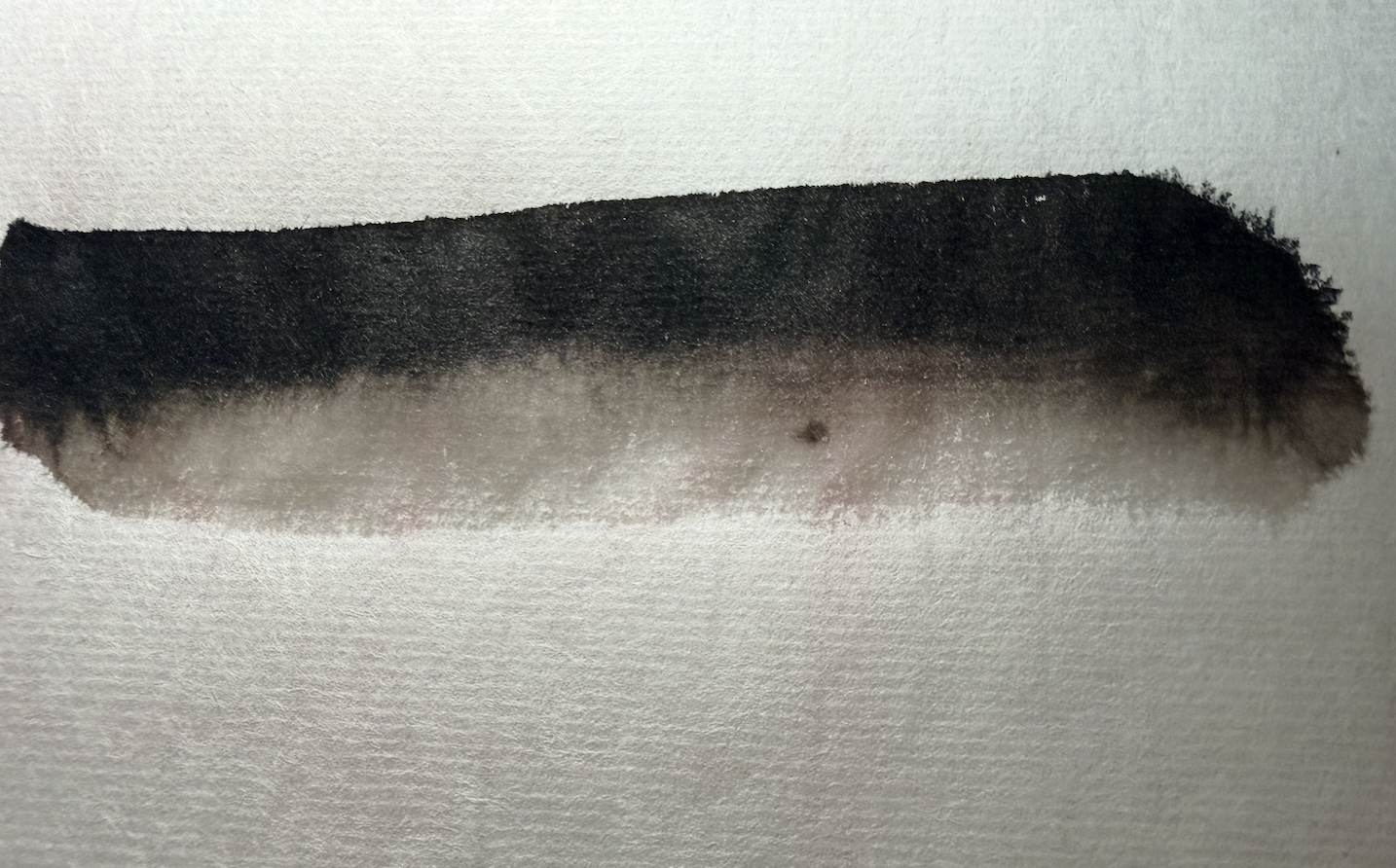
On absorbent raw Xuan paper, moisture carries the ink into the fibres, creating soft transitions and spreading edges.
工笔 (gongbi) — fine, detailed brushwork — is commonly painted on sized paper. Because the ink stays contained, the artist can lay down a precise outline, then return again and again with thin translucent washes of color, building depth slowly without the edges ever blurring.
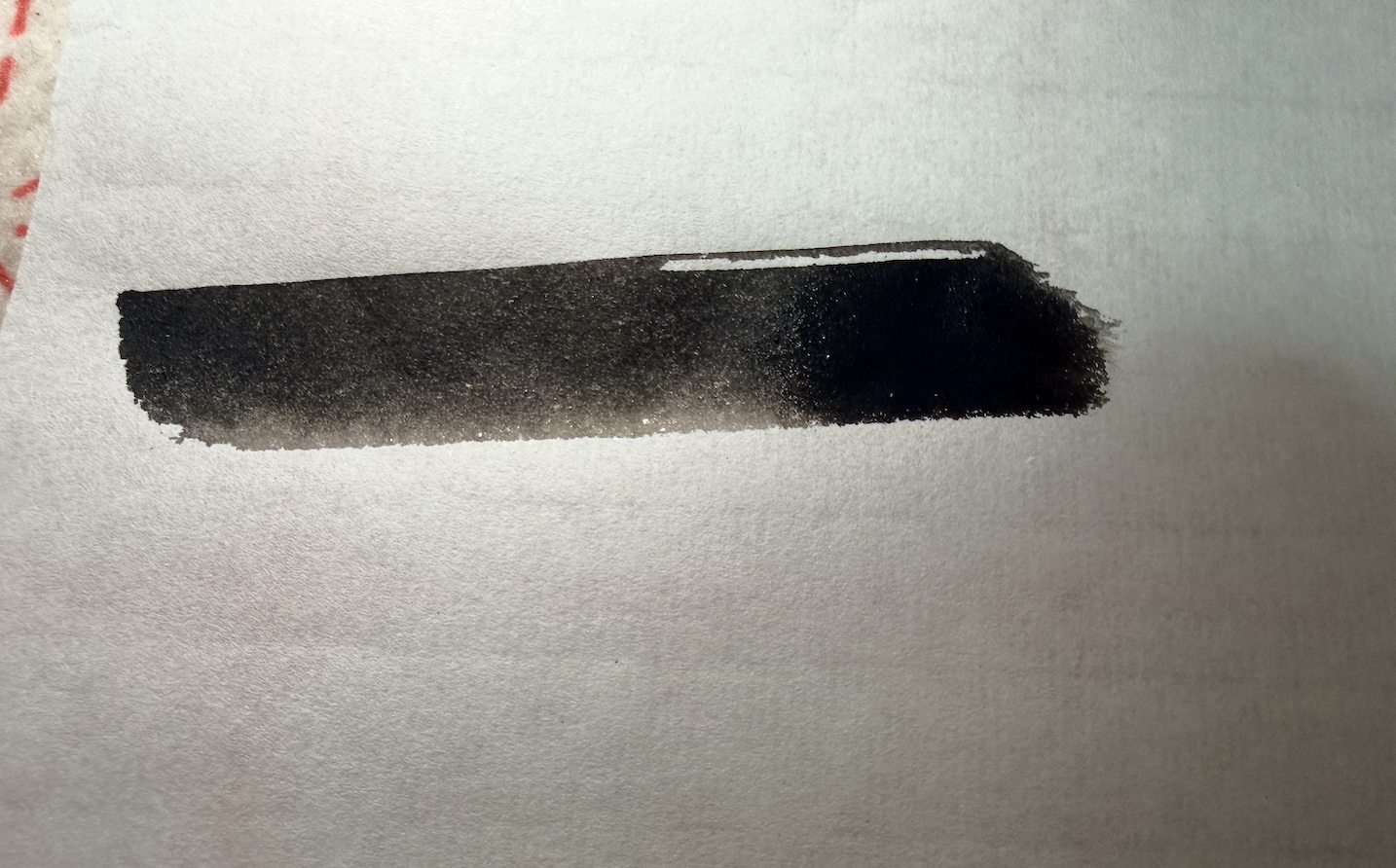
On sized Xuan paper, ink remains closer to the brushstroke, making controlled lines and gradual layers possible.
Neither approach is "better." They ask for different kinds of control. Xieyi works with the movement of ink and water, guiding how it spreads through timing, pressure, and balance. Gongbi controls the image gradually, building precise lines and translucent layers of color over time.
The brush moves. But the paper decides how far.
That quiet decision — raw or sized, spreading or held — happens before the first stroke, and shapes everything that follows. It's one more part of this tradition that looks simple from the outside, and isn't.
