Why Chinese Paintings Have More Than One Seal
The quiet purpose of the corner seal — and why artists don't stop at just one signature.
A traditional painting can carry several red seals, each with its own quiet job. Here's what they are—and how we sign our own work at Hidden Jade.
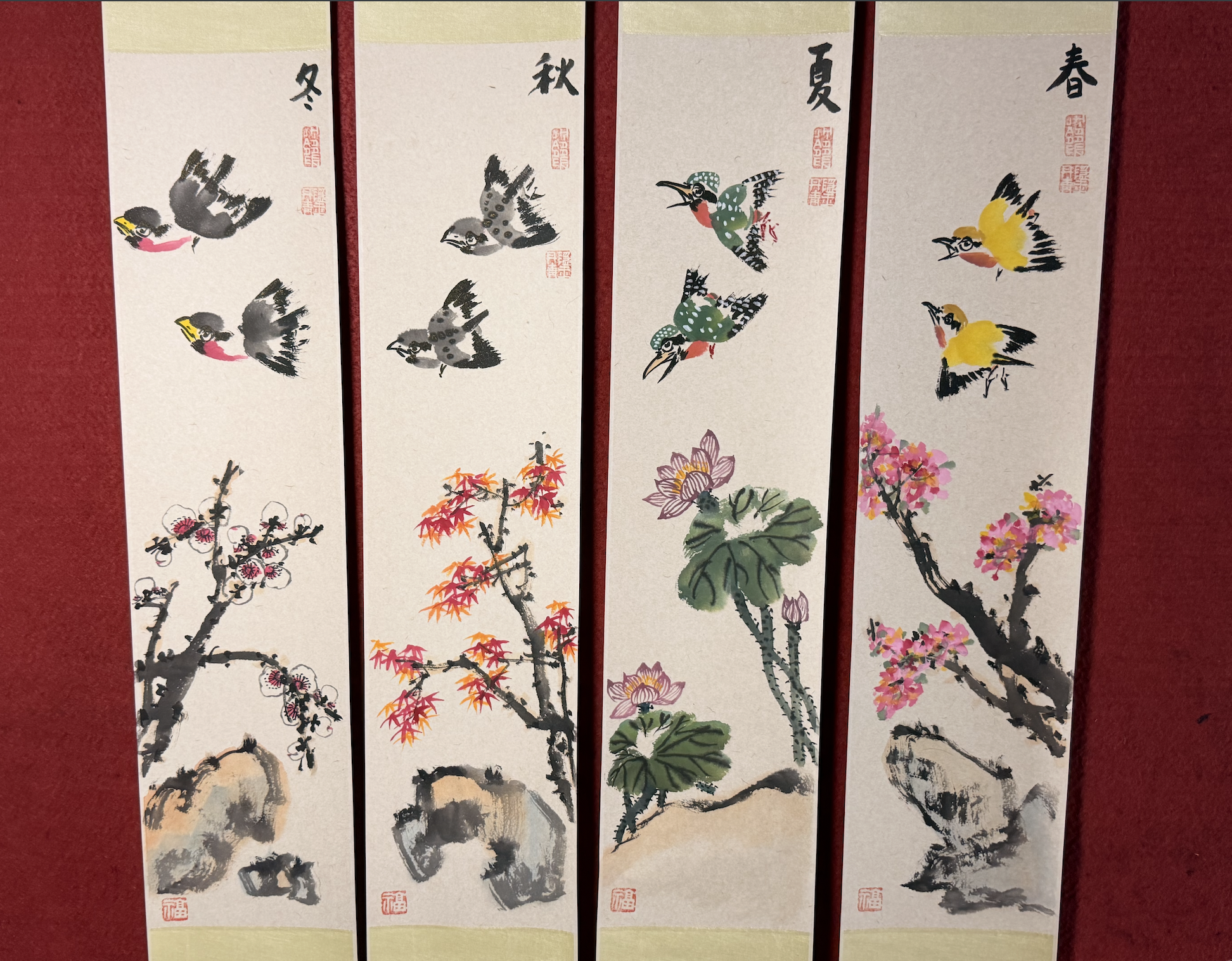
If you've ever looked closely at a traditional East Asian painting, you may have noticed something curious: some works have not one seal, but two, three, or even more.
At first glance, they may all look alike, but they don't always serve the same purpose. Like the brushstrokes themselves, each seal has its own role in completing the painting.
Different seals, different purposes
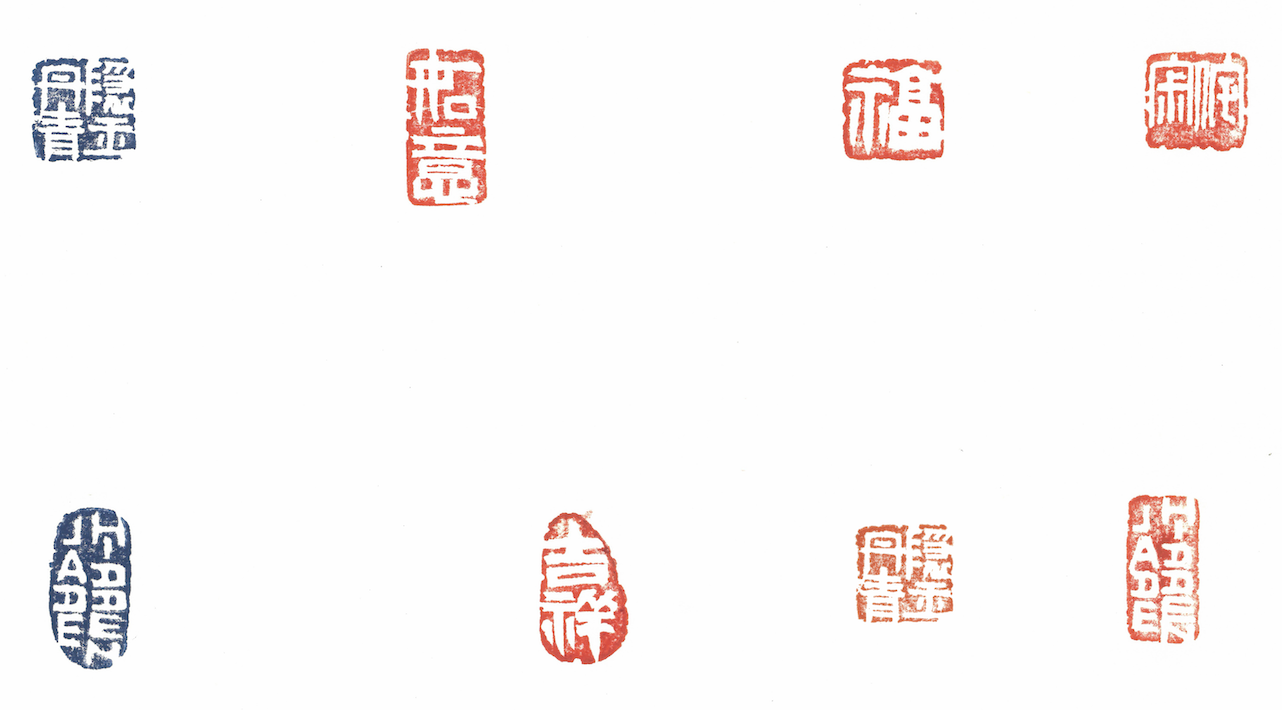
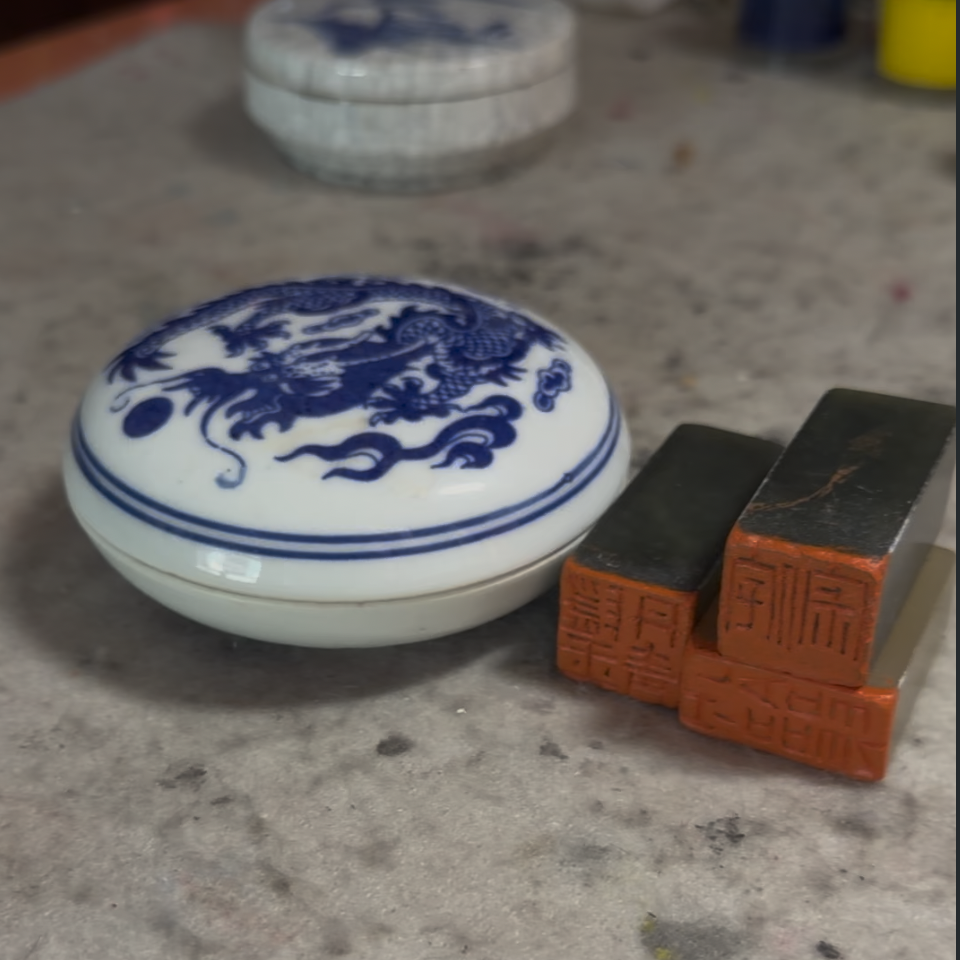
Some of the hand-carved seals used in our studio. Traditional painters often own multiple seals, each serving a different purpose.
Traditionally, painters may use several kinds of seals throughout their work.
Name Seal (名章) — the artist's signature.
This is the seal that identifies who created the painting. It usually appears beside the artist's inscription or signature and is the most familiar type of seal.
Corner Seal (压角章) — a seal that balances the composition.
Rather than identifying the artist, a corner seal is placed to anchor empty space and gently guide the viewer's eye. A carefully positioned seal can quietly complete the visual balance of the entire painting.
Leisure Seal (闲章) — a personal seal.
Instead of a name, these often contain a favorite phrase, a poetic saying, or words that reflect the artist's philosophy, aspirations, or personality.
Collector's Seal (收藏章) — not every seal belongs to the painter.
Collectors, scholars, and museums have traditionally added their own seals after acquiring a painting, creating a visual record of its history and ownership over generations.
The boundaries aren't always strict
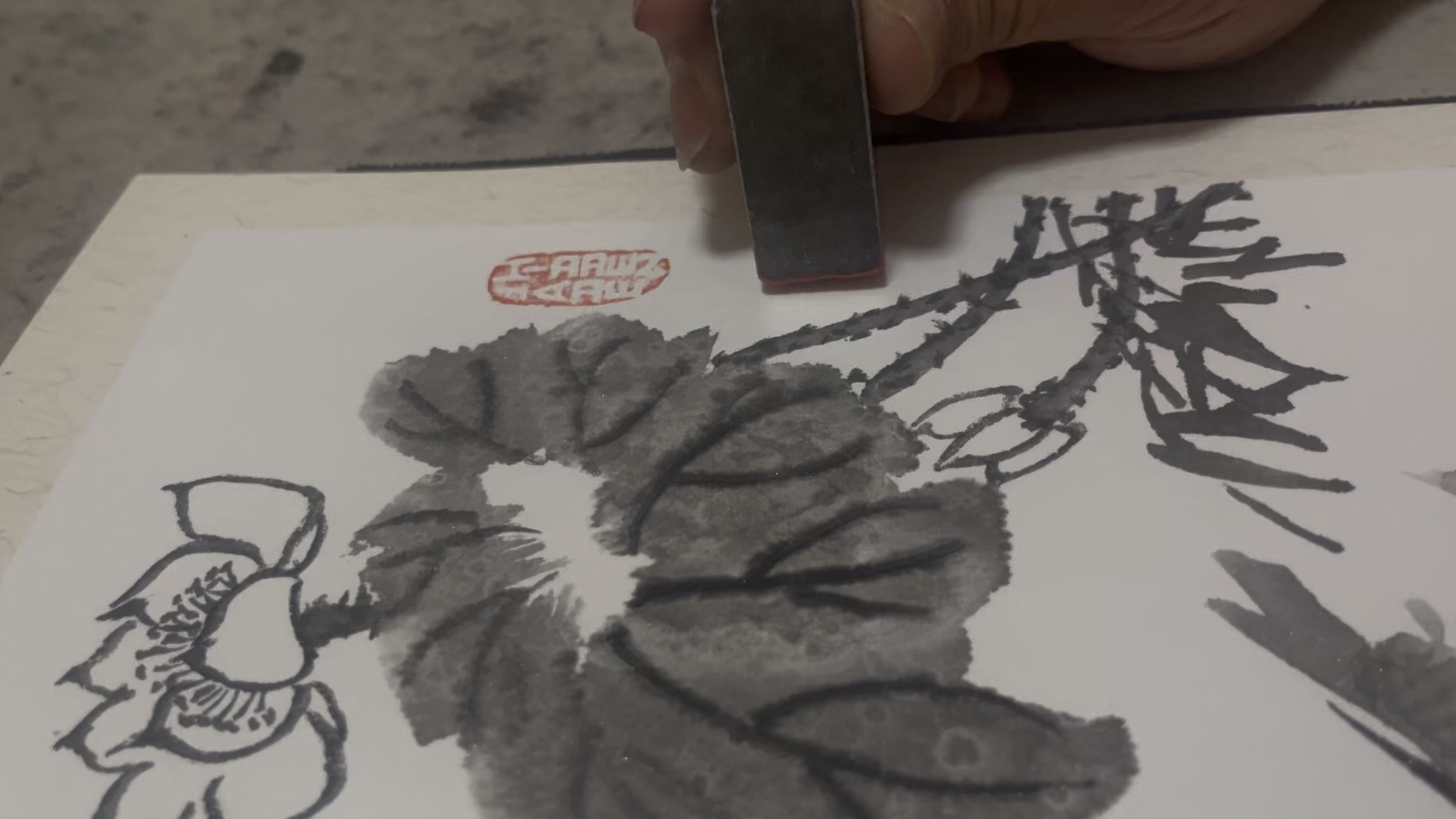
Although these names describe different purposes, traditional painting has never been governed by rigid rules. A single seal can sometimes serve more than one role depending on where it is placed and how it is used.
For example, a name seal placed in the corner of a painting may also function as a corner seal—balancing the composition while still identifying the artist. In traditional brush painting, harmony is often more important than following a fixed formula.
How we use seals at Hidden Jade
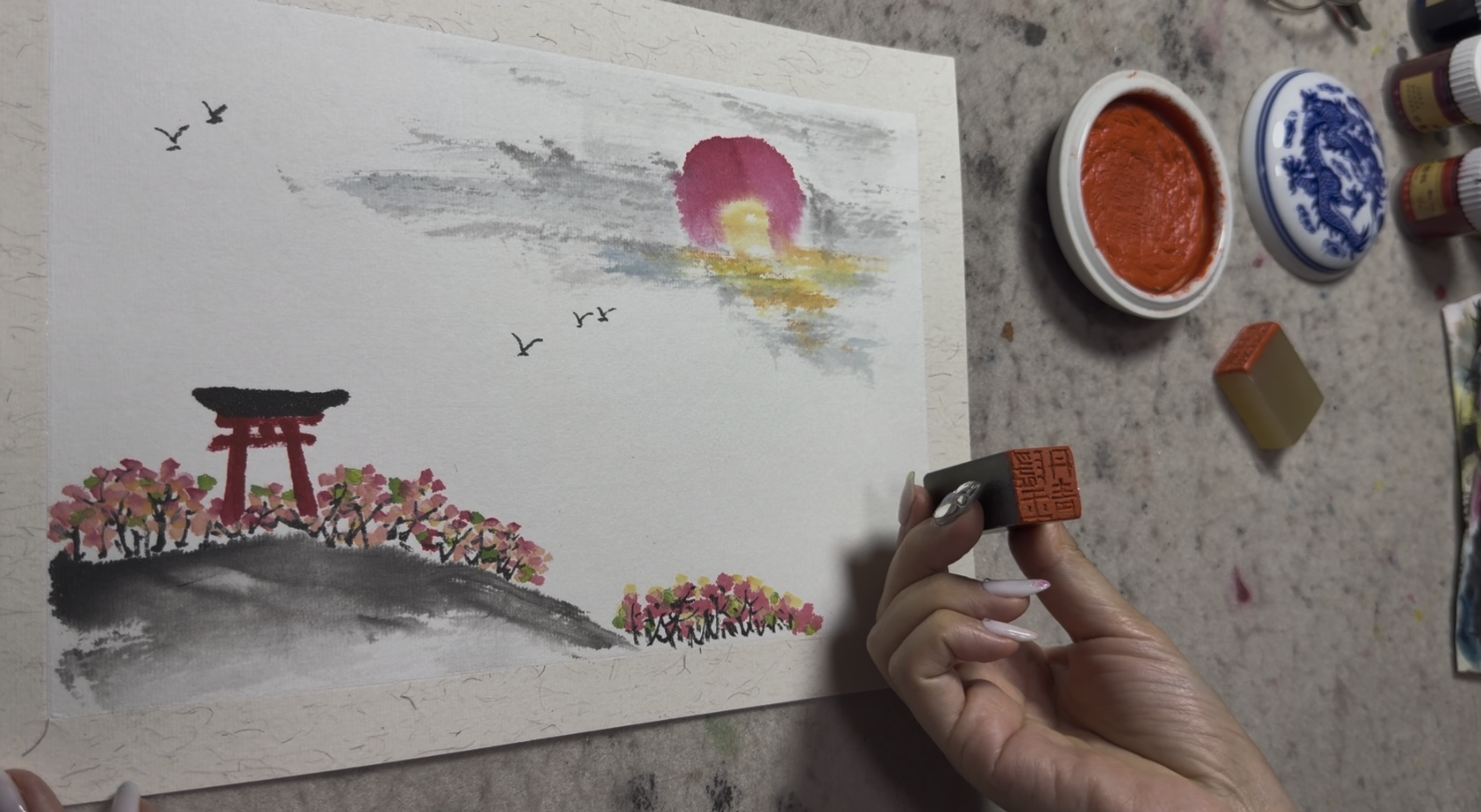
At Hidden Jade Art Studio, we use two hand-carved name seals created by my father, continuing the tradition of Chinese seal carving that has accompanied brush painting for centuries.
Our English seal is usually our primary signature. As we share East Asian brush painting with collectors around the world, it allows international viewers to recognize our studio immediately.
Our Chinese seal (隱玉丹青) often serves as our secondary seal. Depending on the composition, it may also function as a corner seal, adding visual balance while reinforcing our identity. Rather than assigning each seal a fixed role, we place them where they best complete the painting.
For us, the seal is never added simply because tradition says it should be. Like every brushstroke, its placement is part of the composition itself.
A Seal Is More Than a Signature
A seal is never just a stamp.
Whether it marks the artist's name, balances an empty corner, carries a favorite phrase, or records the journey of a treasured painting through generations of collectors, each seal becomes part of the artwork itself.
Sometimes one is enough.
Sometimes the painting quietly asks for another.
Knowing the difference is part of a tradition that has been passed from one generation of artists to the next—and one we are proud to continue at Hidden Jade.
