Gongbi and Xieyi: Two Ways of Painting the Lotus
The same flower can be observed in precise detail—or remembered in a handful of expressive strokes.
Place two traditional Chinese lotus paintings beside each other and they may seem to come from different worlds.
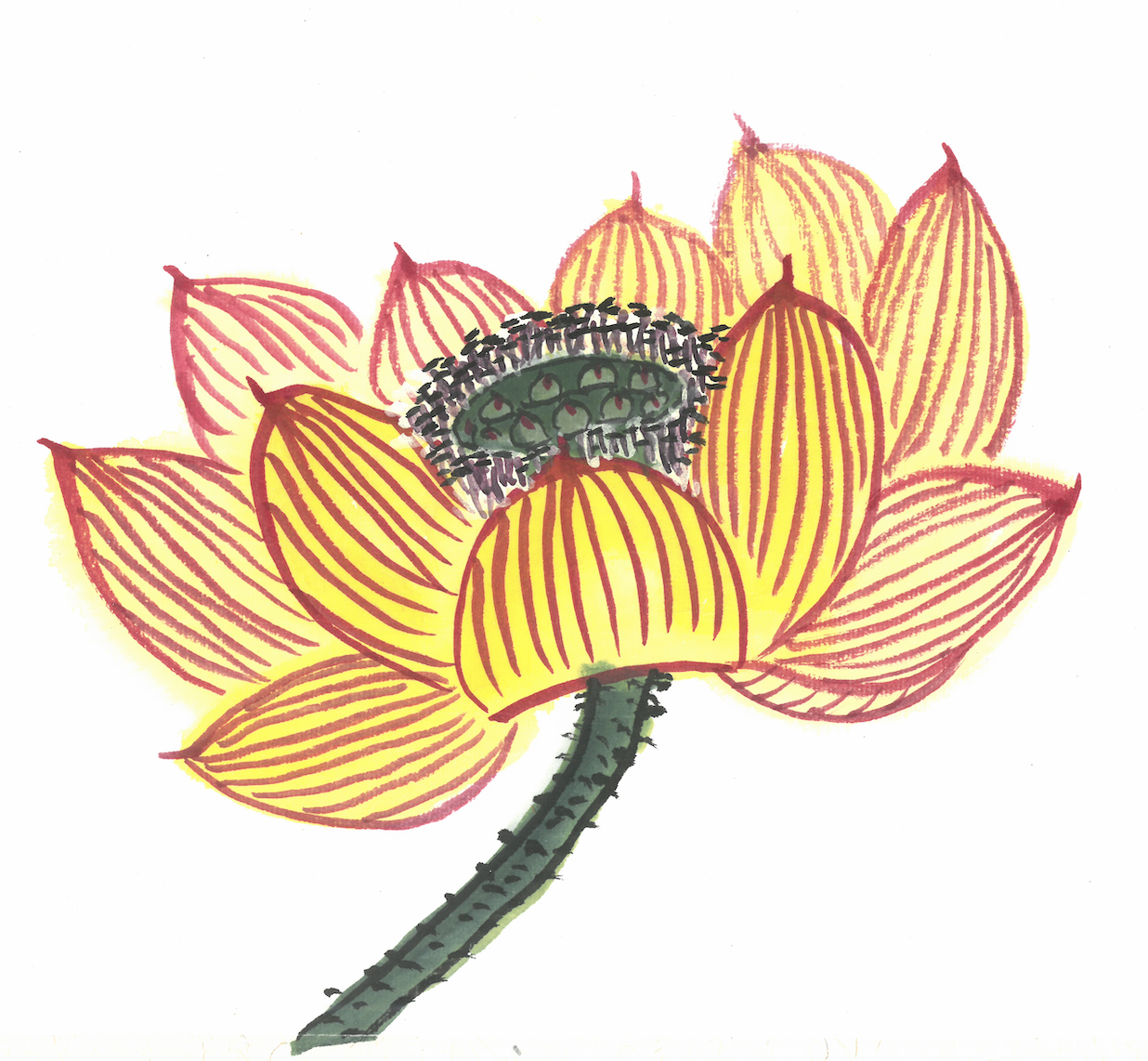
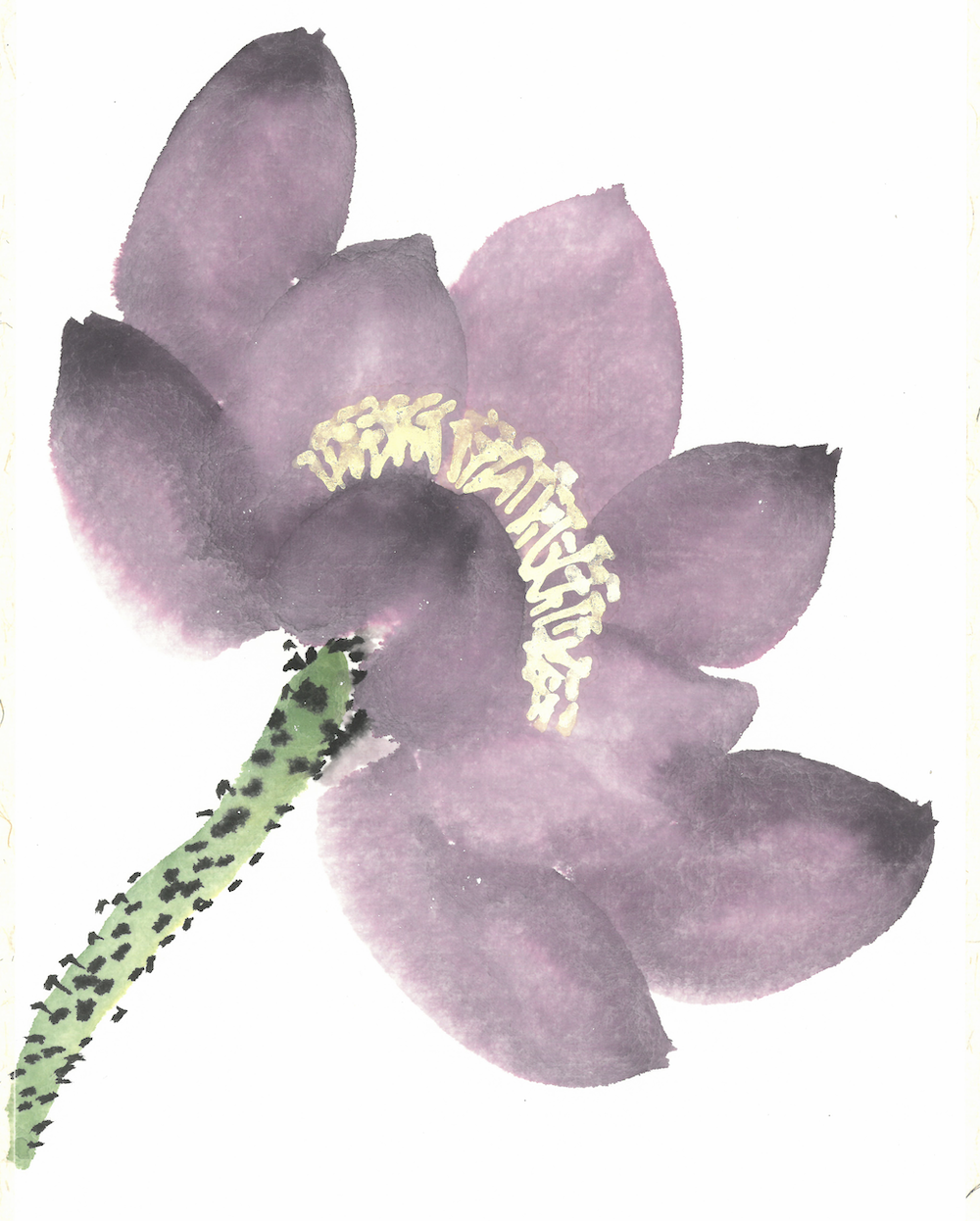
In one, every petal is carefully outlined. Colour settles inside each shape in delicate layers, and even the veins of a leaf may be visible. In the other, a broad sweep of ink becomes a leaf; a few fluid marks suggest petals bending in the air. Some edges remain clear, while others dissolve softly into the paper.
Both paintings show the lotus. Both require years of brush control. But they belong to two different approaches to Chinese painting: 工笔 (gongbi) and 写意 (xieyi).
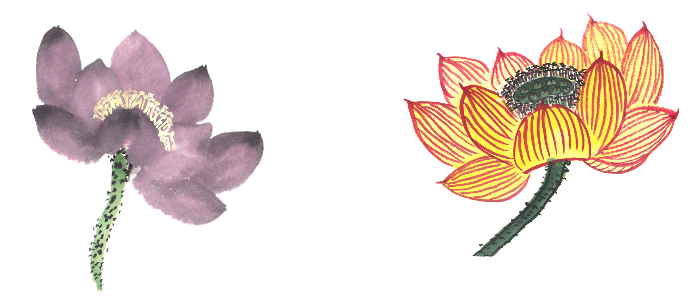
Xieyi lotus (left) gongbi lotus (right)
Gongbi: beauty built slowly
The name gongbi is often translated as “meticulous brushwork.” It begins with precise lines that establish the structure of the flower: the curve of each petal, the turn of a stem, the edge of a lotus leaf.
Once the drawing is in place, colour is not simply filled in all at once. Thin, translucent washes are added gradually. One layer dries before another is placed over it, allowing depth and softness to develop without losing the clarity of the original outline.
This is why a gongbi painting can take so long. Its quiet beauty is cumulative. No single layer creates the finished flower; the image emerges through patience, repetition and restraint.
Xieyi: capturing the spirit
Xieyi is commonly translated as “writing the idea” or “expressing the meaning.” Instead of describing every visible detail, the artist decides what is essential—and lets the brush carry that impression.
A lotus leaf may be formed with one broad movement. A change in pressure can turn a dark stroke into a dry, broken edge. Water allows pale ink to spread into the paper, while a more concentrated touch creates weight and contrast.
The result may look simple, but simplicity leaves nowhere to hide. The painter must control the balance of ink and water, the moisture held in the brush, the speed of the stroke and the absorbency of the paper. Once a mark begins to spread, it cannot be erased or called back.
Xieyi is not unfinished gongbi. It is a different kind of completeness—one that leaves space for movement, atmosphere and feeling.
Two kinds of control
The difference is sometimes described as detail versus freedom, but that is only part of the story.
Gongbi controls the image gradually. The artist works through fine outlines and repeated layers, making small decisions over time.
Xieyi controls the moment. Water, pressure, timing and movement must come together within a stroke that may last only a second.
One asks the hand to remain steady. The other asks it to be decisive. Neither is the easier path.
The paper supports these different relationships with the brush. As we explored in our previous Brush Story, gongbi is commonly painted on sized xuan paper, which holds a clean line and allows colour to be layered. Xieyi often uses raw xuan paper, where ink can enter the fibres and bloom beyond the visible edge of the brush.
Why the lotus suits both
The lotus is especially beautiful for this comparison because it offers both structure and movement.
Its layered petals reward the precision of gongbi. Its broad leaves, bending stems and reflections in water invite the freer rhythm of xieyi. One approach lets us study the flower closely; the other recalls the feeling of seeing it move in wind and water.
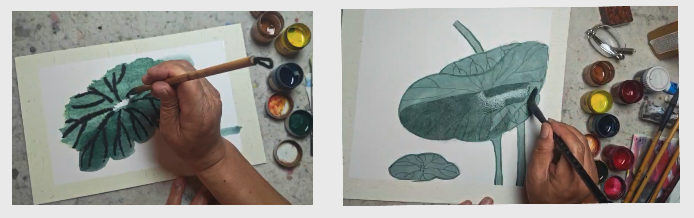
Xieyi leaf (top) — one broad stroke.
Gongbi leaf (bottom) — fine outline, layered by hand.
In my father’s paintings, the subject remains the same, but the attention changes. One lotus asks us to come closer and notice. The other asks us to step back and feel.
That may be the clearest difference between gongbi and xieyi—not accuracy versus expression, but two ways of understanding what a painting can preserve.
One preserves the flower’s visible form. The other preserves the moment it left behind.
