Why Do Traditional Chinese Paintings Have Red Seals?
The disappearing art of hand-carved seals — and why my father still carves every one by hand
One of the questions we're asked most often at Hidden Jade is about the small red marks pressed into our paintings. What are they? Why red? And why are there sometimes several on a single piece?
They're seals — carved marks that identify the artist and complete the work. Traditionally, many painters considered a work finished only once the seal was placed. Most artists own more than one: a name seal that says who made the painting, and corner seals set to balance the composition and guide the eye. A single piece may carry several.
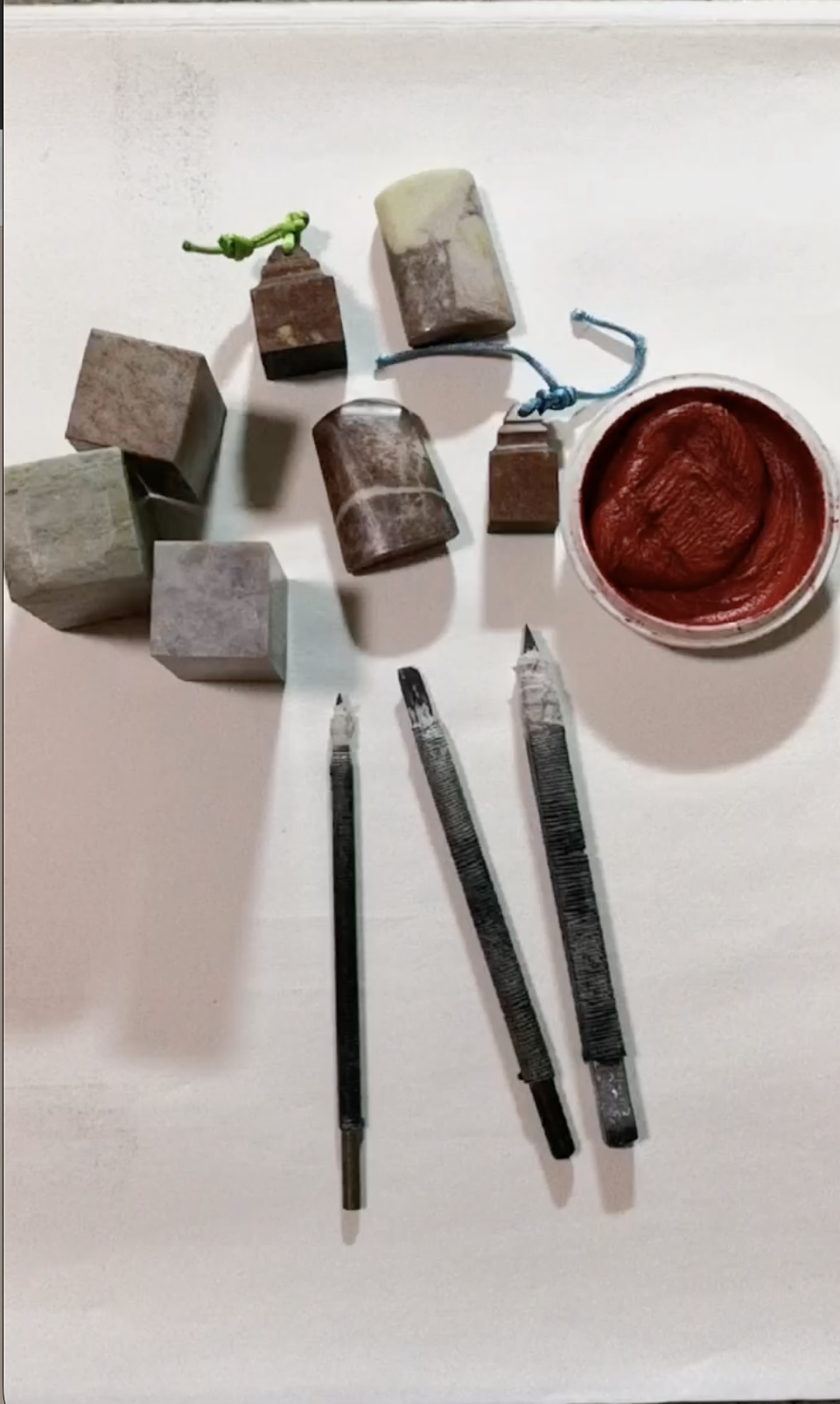
Traditional seal carving tools and stone seals
As for the red — it's an artistic choice as much as a traditional one. The paste is called 印泥, made from cinnabar (朱砂) ground with oil and fine fiber. Its vivid vermilion holds its color for centuries, but just as important is what it does to the picture: against black ink and pale xuan paper, that small point of red creates balance and draws the eye, making the seal part of the composition rather than a mere signature. That is why red became the classic — though seal paste also comes in blue, black, and other tones an artist may choose to suit a particular painting.
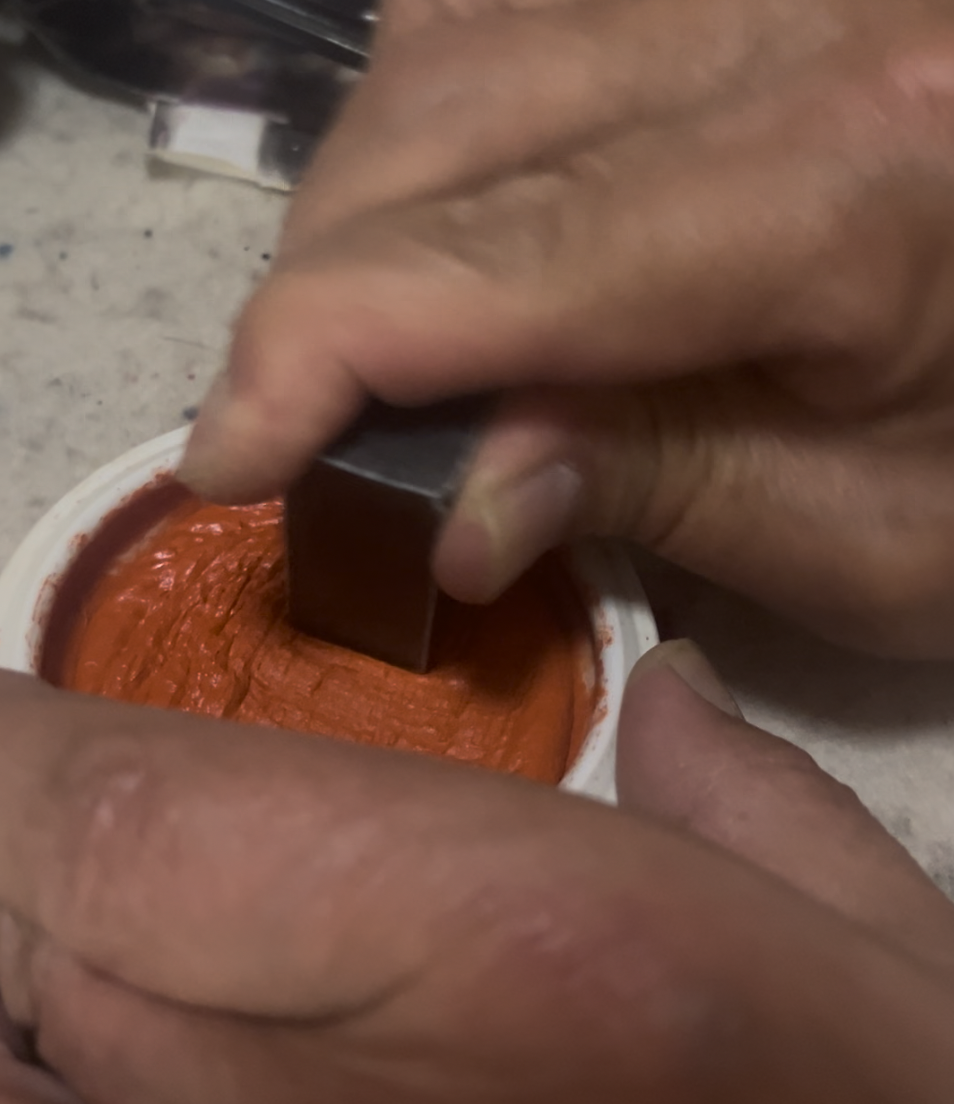
Applying traditional cinnabar seal paste
Here's the part most people don't know: traditionally, an artist didn't buy a stamp. They carved one.
The craft is called 篆刻 — seal carving. Using a small steel blade, the characters are cut into a block of stone by hand, one stroke at a time, often in an ancient seal script that hasn't changed in thousands of years. It's slow, unforgiving work: stone doesn't allow mistakes.
Very few artists today still carve their own seals by hand. Painters still own their seals — but most are now cut by machine. The hand-carved tradition is quietly disappearing.
My father is one of the few who still carves all of his seals himself, by hand. He's been painting since the 1980s, and he cuts each one from stone before pressing it into the finished paper.
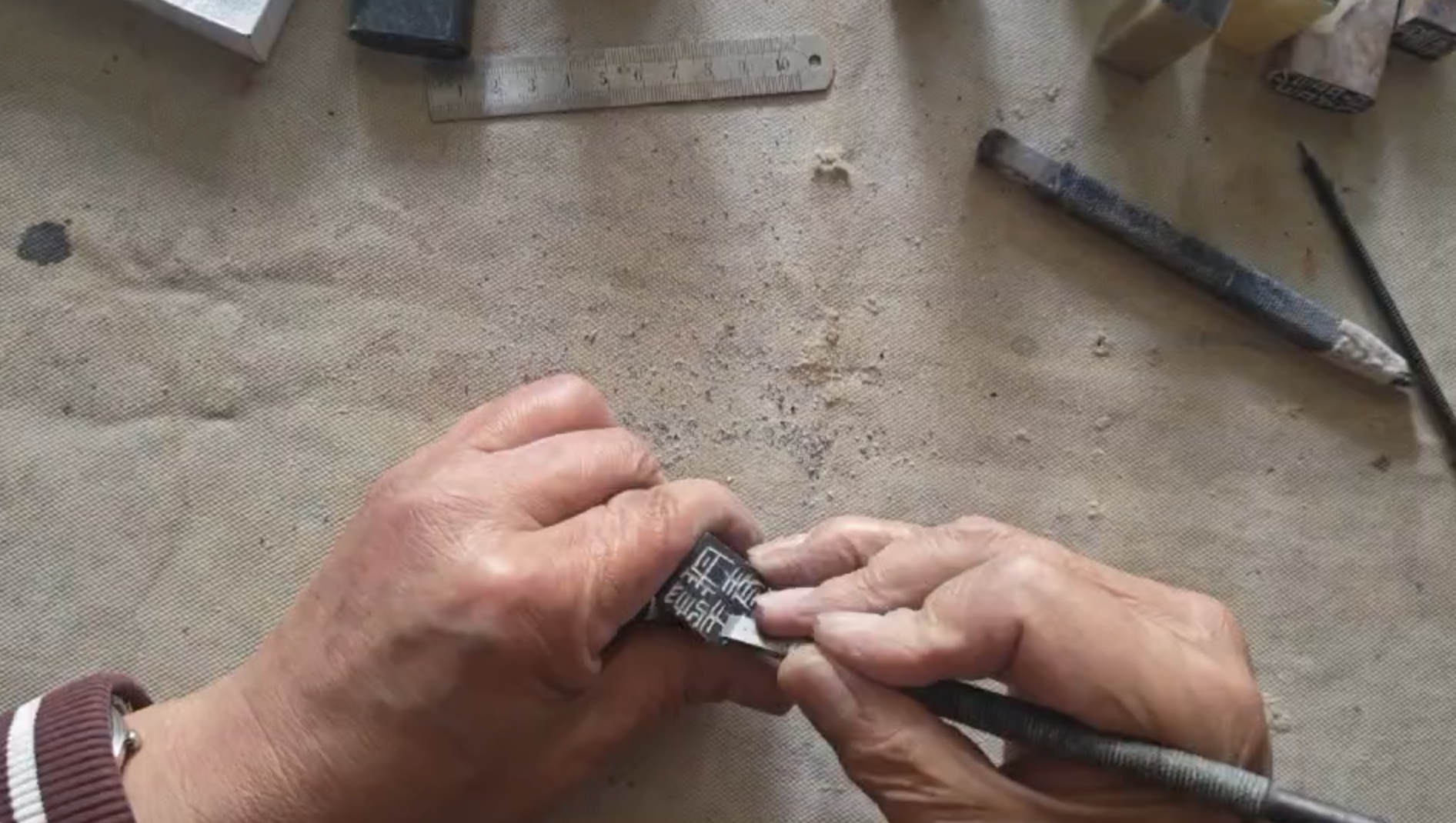
Each seal is carved by hand
When we started our studio, he carved a seal for it too: 隱玉丹青 — Hidden Jade.
The name was chosen with care. 丹青 is an old word for painting itself, taken from the cinnabar red and mineral blue-green that traditional painters have used for centuries — the very red, in fact, that lives in the seal. 隱玉, "hidden jade," speaks to the kind of beauty we love most: jade is treasured in East Asian culture not because it shines loudly, but for a quiet, understated grace that reveals itself slowly. Together the name means something like quiet beauty, carried through brush and ink — the spirit we hope each painting brings into your home. Fittingly, this one seal can play both roles: as a name seal it marks who made the work; set in a corner, it becomes a corner seal that balances the composition.
A painting isn't finished when the ink dries. It's finished when the seal is placed.
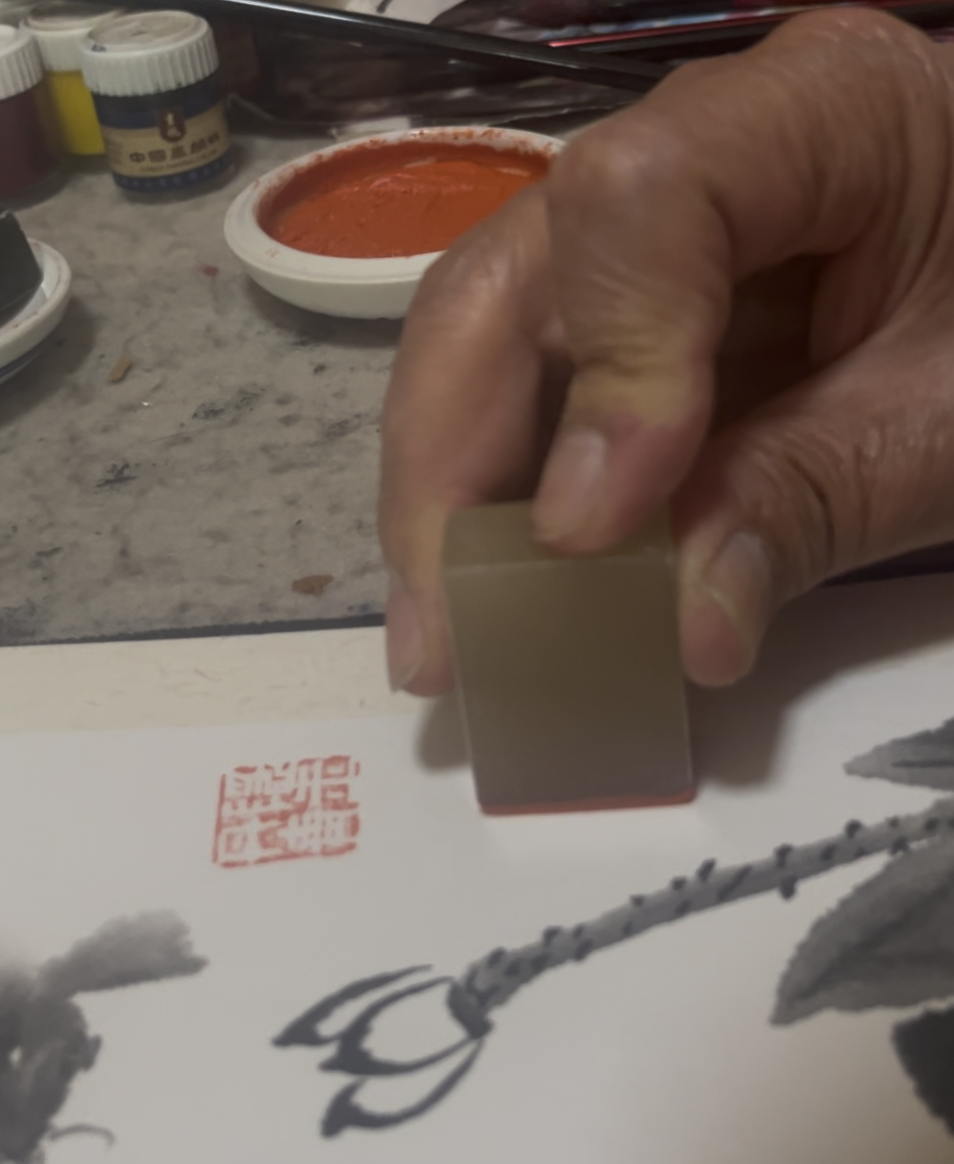
The final seal completes the painting
So every painting that leaves our studio carries not only a brushstroke, but a name carved by hand into stone — the last, quiet mark of a tradition we hope to keep alive.
