The Beauty of Xieyi: When Ink, Water and Emotion Meet
When colour falls away, every decision of the brush becomes visible.
At first glance, Xieyi painting can seem almost effortless.
A bird appears in a few confident strokes. Leaves gather around a branch without every vein being described. A flower may be suggested by nothing more than a turn of the brush and a change in pressure.
Yet the fewer marks a painting contains, the more each one must do.
Xieyi (写意) is often translated as “writing the idea” or “painting the spirit.” Its purpose is not to record every visible detail. It seeks something more elusive: the character, movement and feeling of its subject. That freedom is what makes Xieyi so alive—and what makes it so demanding.
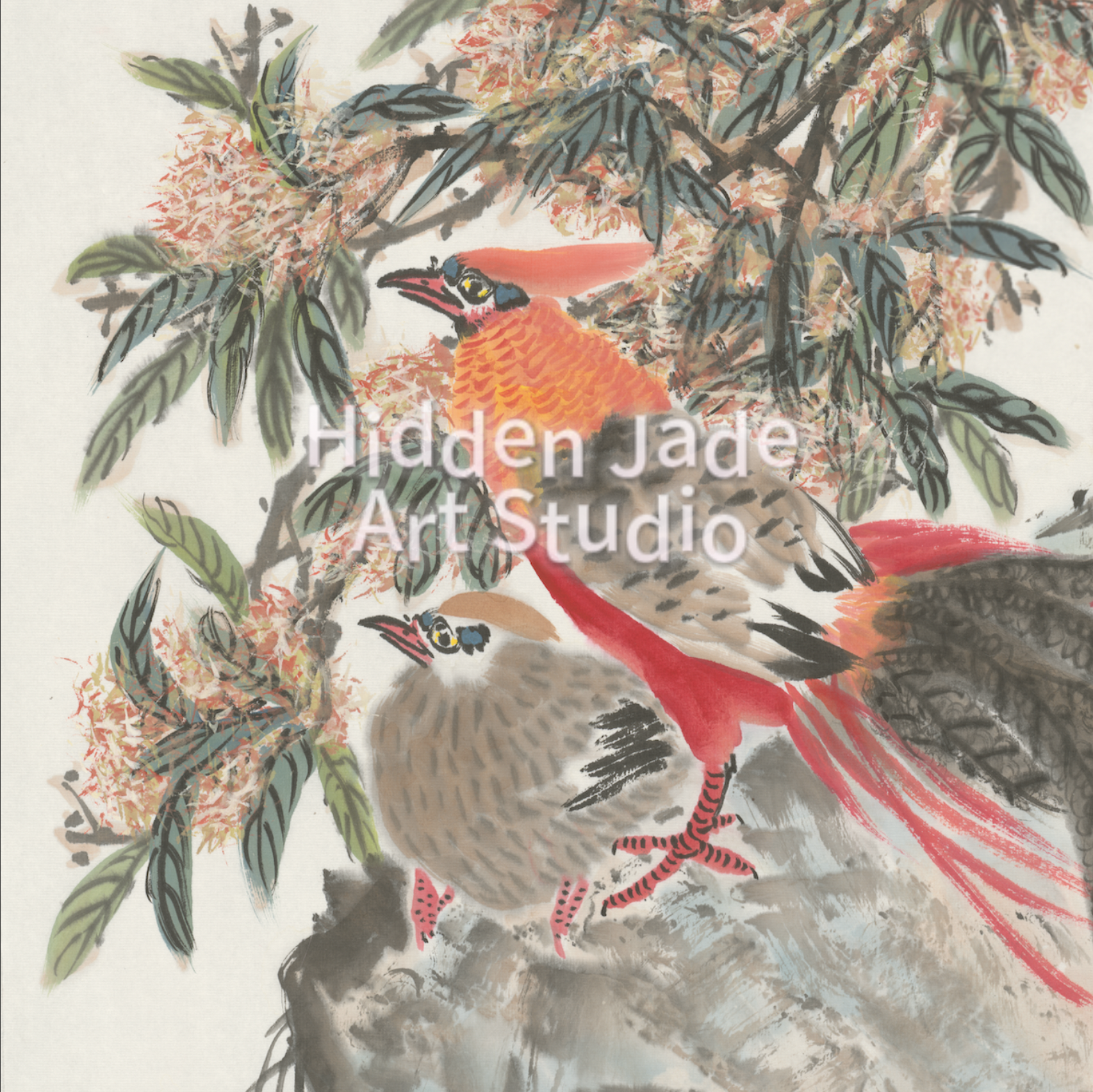
Golden Pheasants and Osmanthus (富貴吉祥), painted in the expressive Xieyi style.
A complete world in a few strokes
In Golden Pheasants and Osmanthus (锦鸡桂花), colour immediately draws us into the scene. Warm orange and red plumage gives the birds their brilliance, while broad ink leaves and branches create a darker rhythm around them.
The painting feels abundant, but it is not built through laborious description. The turn of a head, the angle of a tail and the weight of a bird on a branch are established through a small number of decisive marks. Colour helps separate the forms and create atmosphere, but it cannot give them life on its own. That still comes from the brush.
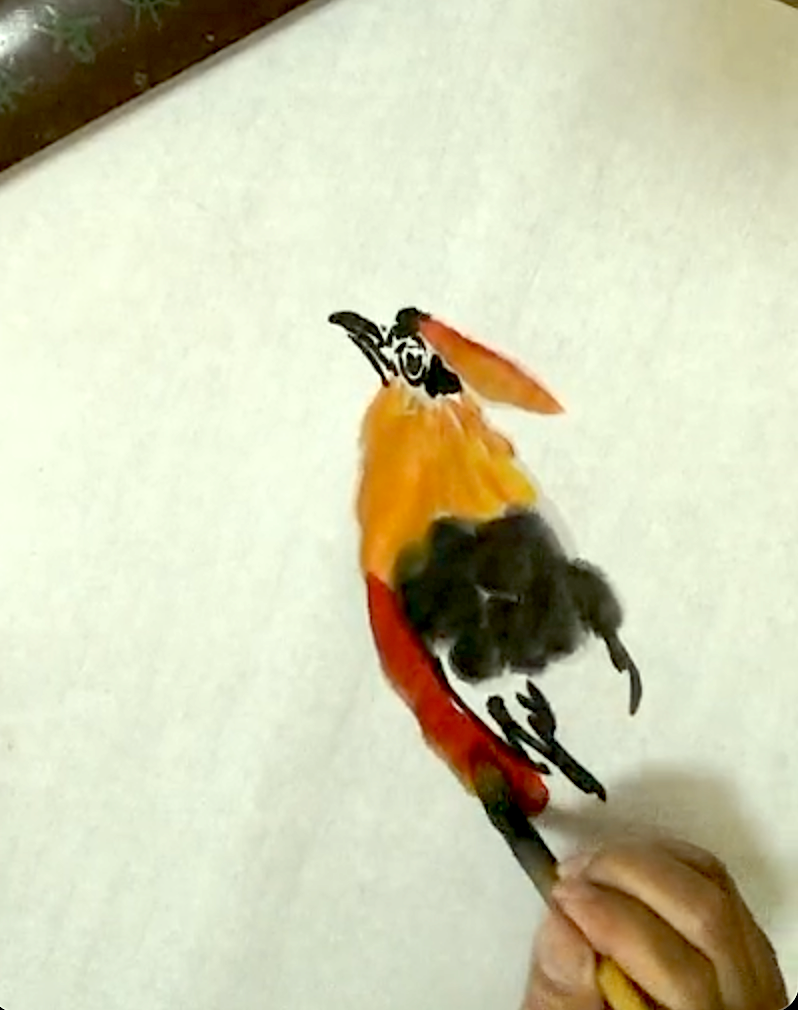
A soft wash suggests the rounded body of a bird. A sharper, darker stroke defines the beak or eye. Dry, broken ink becomes the texture of bark; a wetter brush makes a leaf feel full and newly opened. Each change carries information.
When colour steps back
Monochrome Xieyi does not necessarily require more skill than a colourful painting. It simply reveals a different part of the painter’s skill more plainly.
When colour is reduced, the brush has fewer places to hide.
Chinese ink is never only one black. It can be dense and glossy, pale and mist-like, wet enough to bloom into the paper, or dry enough to leave a broken, textured trail. Water, ink concentration, brush loading, pressure, speed and timing all change the mark.
In a colourful work, hue can help distinguish a flower from a leaf or a bird from its surroundings. In monochrome, those differences must be created through tone, edge, texture and movement. The viewer begins to notice not only what has been painted, but how the brush travelled.
Lotus and koi: weight and movement
In the lotus-and-koi painting, a single ink palette creates very different sensations.
The lotus leaves carry weight. Their broad washes and dark veins make them feel substantial, while the flower above remains open and light. Below, the koi seem to move through open water. Their bodies emerge from pale, watery ink, while darker accents define their backs and give direction to their movement.
The process makes these differences especially clear. A small change in angle can turn a pointed stroke into a rounded one. Pressing the brush creates breadth; lifting it restores a fine line. Moving quickly preserves energy. Lingering allows water and ink to settle into the fibres.
Nothing is modelled through smooth, gradual shading in the Western sense. Depth comes from the relationship between wet and dry, pale and dark, empty and filled. The untouched paper is not simply background; it gives the painted forms room to breathe.
This is why restraint matters so much in Xieyi. Knowing where to stop is part of the painting. Another stroke may add information, yet take away vitality.
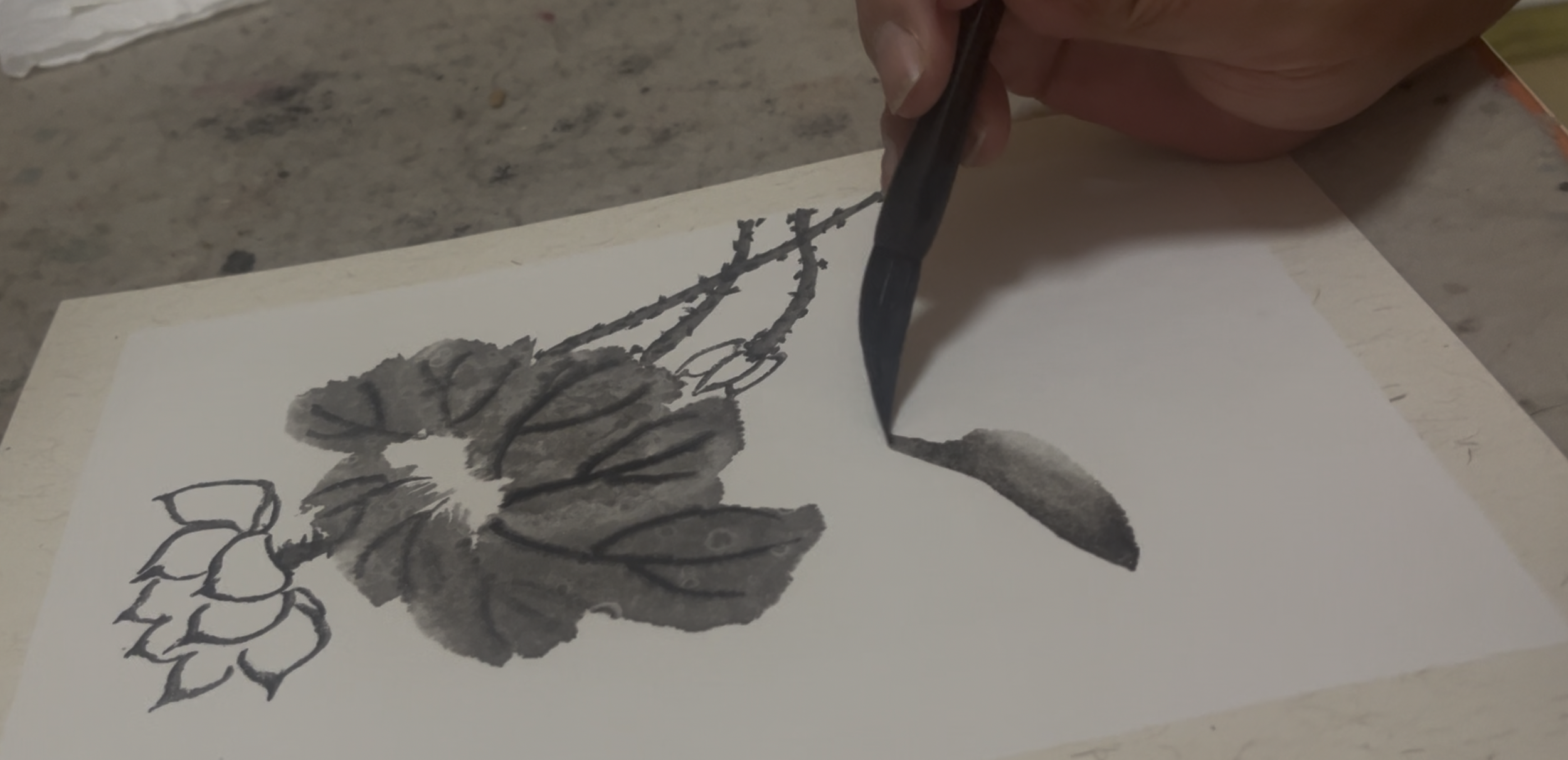
A pale koi formed with watery ink beneath the heavier leaves of the lotus.
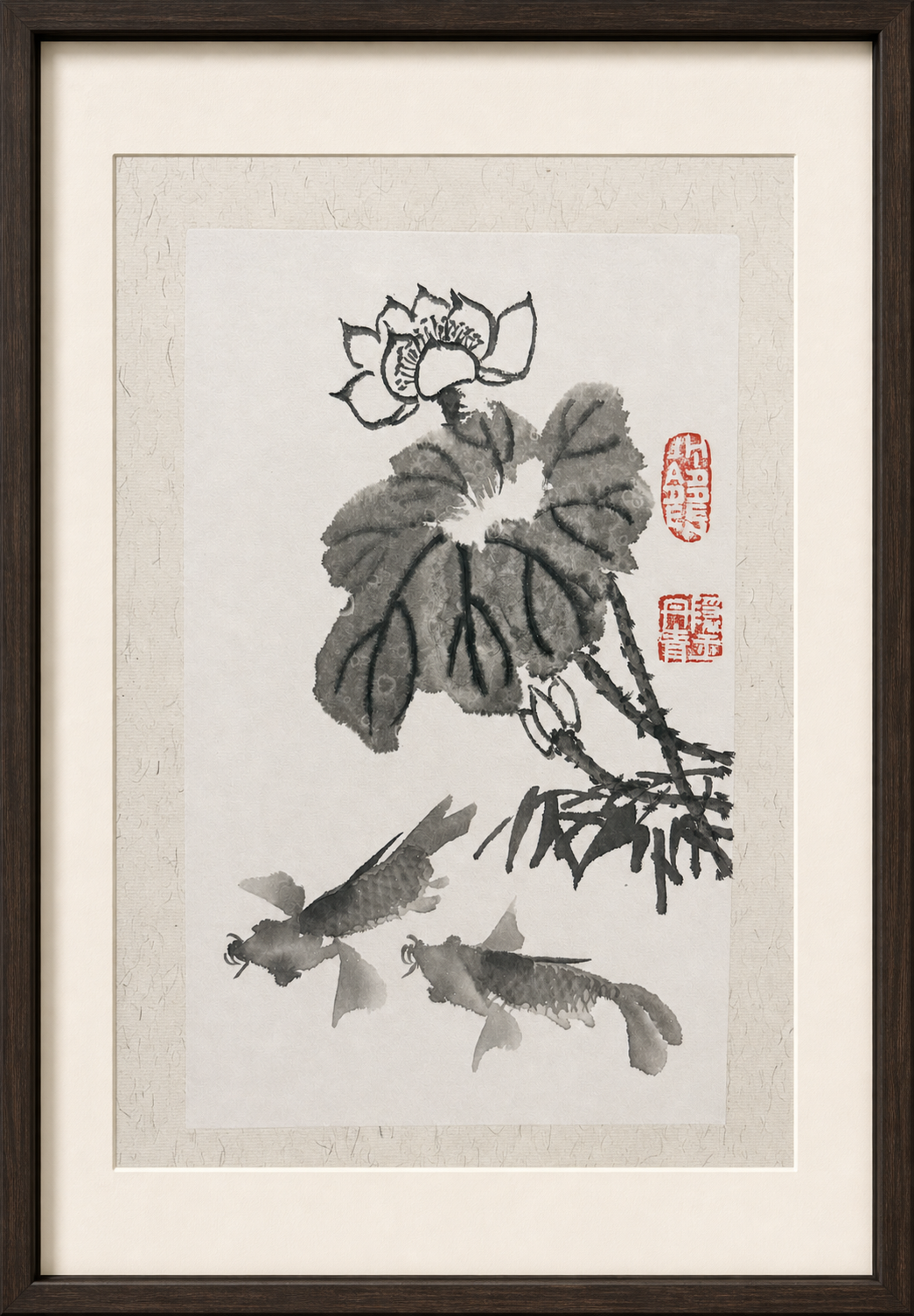
The finished image may look spontaneous, but spontaneity is not the absence of control. It is control that has been practised deeply enough to feel natural.
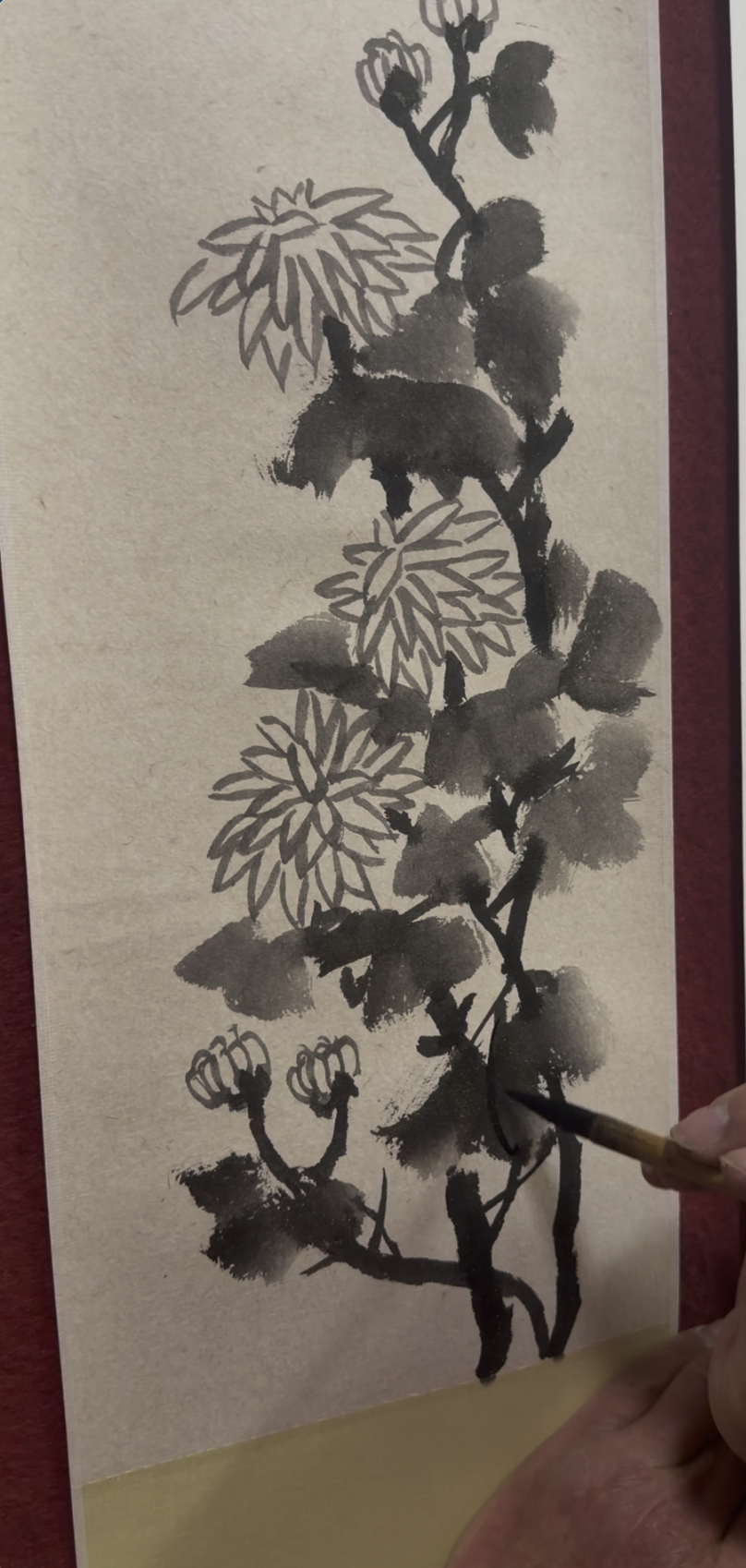
Another subject, the same brush language
The monochrome chrysanthemum offers a quieter final example. Fine, open lines hold the petals, while broader, darker marks give weight to the leaves and stems. Without colour separating the forms, differences in pressure, moisture and speed become the painting's structure.
The subject has changed, but the principle remains: one brush can carry many voices.
Fewer strokes, not fewer decisions
Xieyi painting is sometimes mistaken for a quick or casual form because its marks look direct. But every direct mark rests on decisions made before the brush touches the paper: how much water it holds, where the ink sits in the hairs, how firmly it will land, how quickly it will travel and when it must lift.
Once the stroke is placed on absorbent paper, it cannot simply be polished into obedience. Its character remains visible.
That is the beauty of Xieyi. It does not try to explain everything. It leaves space for breath, suggestion and imagination—while asking the brush to say more with less.
Fewer strokes do not mean fewer decisions. They make every decision matter.
