Why Is the Chinese Dragon a Symbol of Good Fortune?
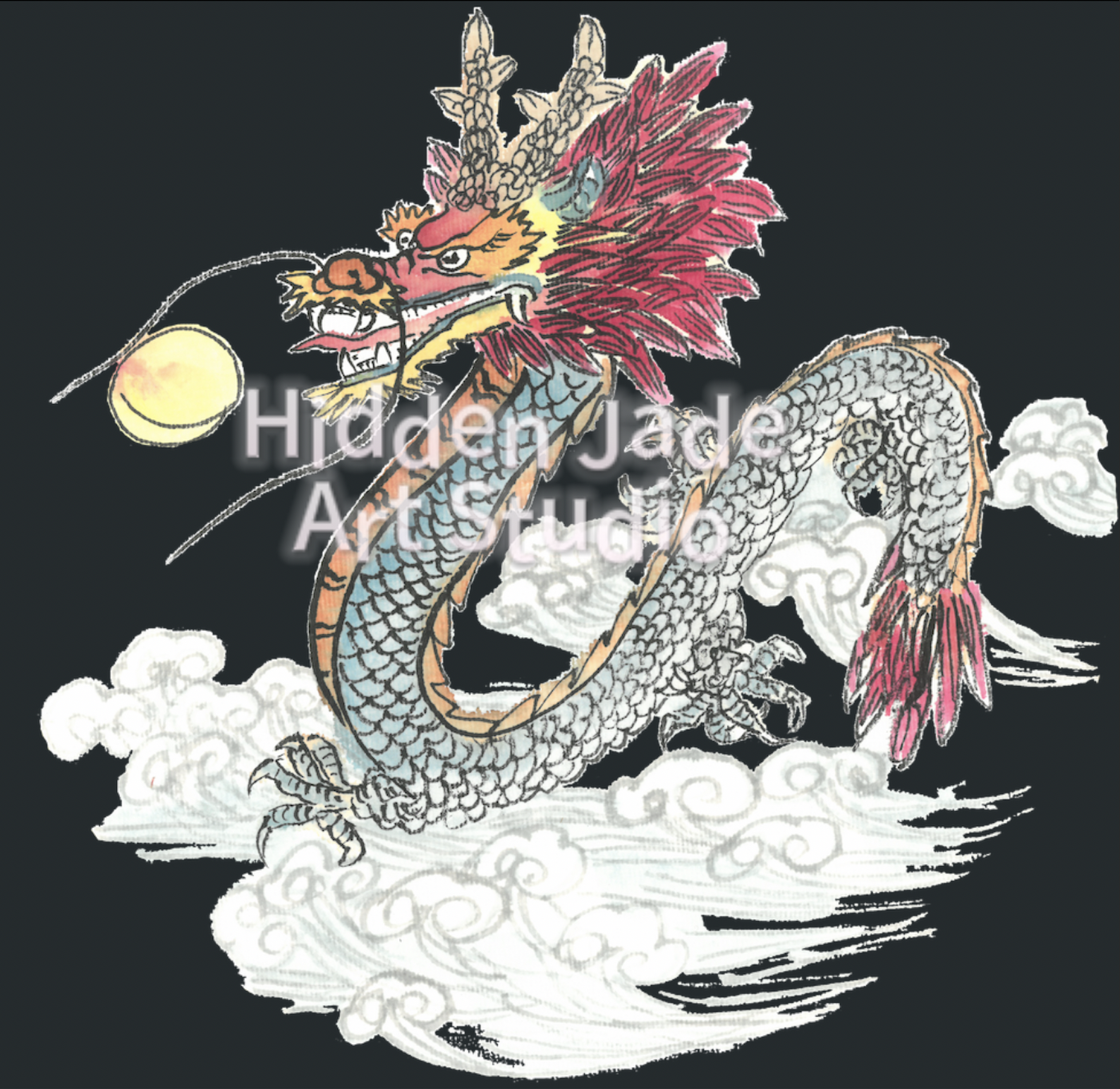
A dragon by Hidden Jade Art Studio, with branching horns, overlapping scales and hooked claws. Explore Dragon PNG Clipart Collection
A Chinese dragon can look familiar and impossible at the same time. Its antlers belong on a deer, its scales resemble a fish’s, and its sharp claws look ready to grip like an eagle’s. Together, these features form a creature that generations of painters have imagined in different ways.
One traditional description offers a guide to its unusual appearance. Known as the nine resemblances, or 九似, it compares nine features of the dragon with other creatures. The version recorded in Li Shizhen’s Ming-dynasty Bencao Gangmu (本草纲目) gives us a way to follow these details. [Source: Bencao Gangmu, vol. 43, “Dragon.”]
Looking closely at the dragon
Begin with the head: the branching horns resemble a deer’s antlers, the head is compared to a camel’s, and the ears to an ox’s. The Bencao Gangmu gives it rabbit-like eyes; Luo Yuan’s earlier Erya Yi (尔雅翼) describes ghost-like eyes instead. Even this small detail reminds us that the dragon’s appearance was never completely fixed.
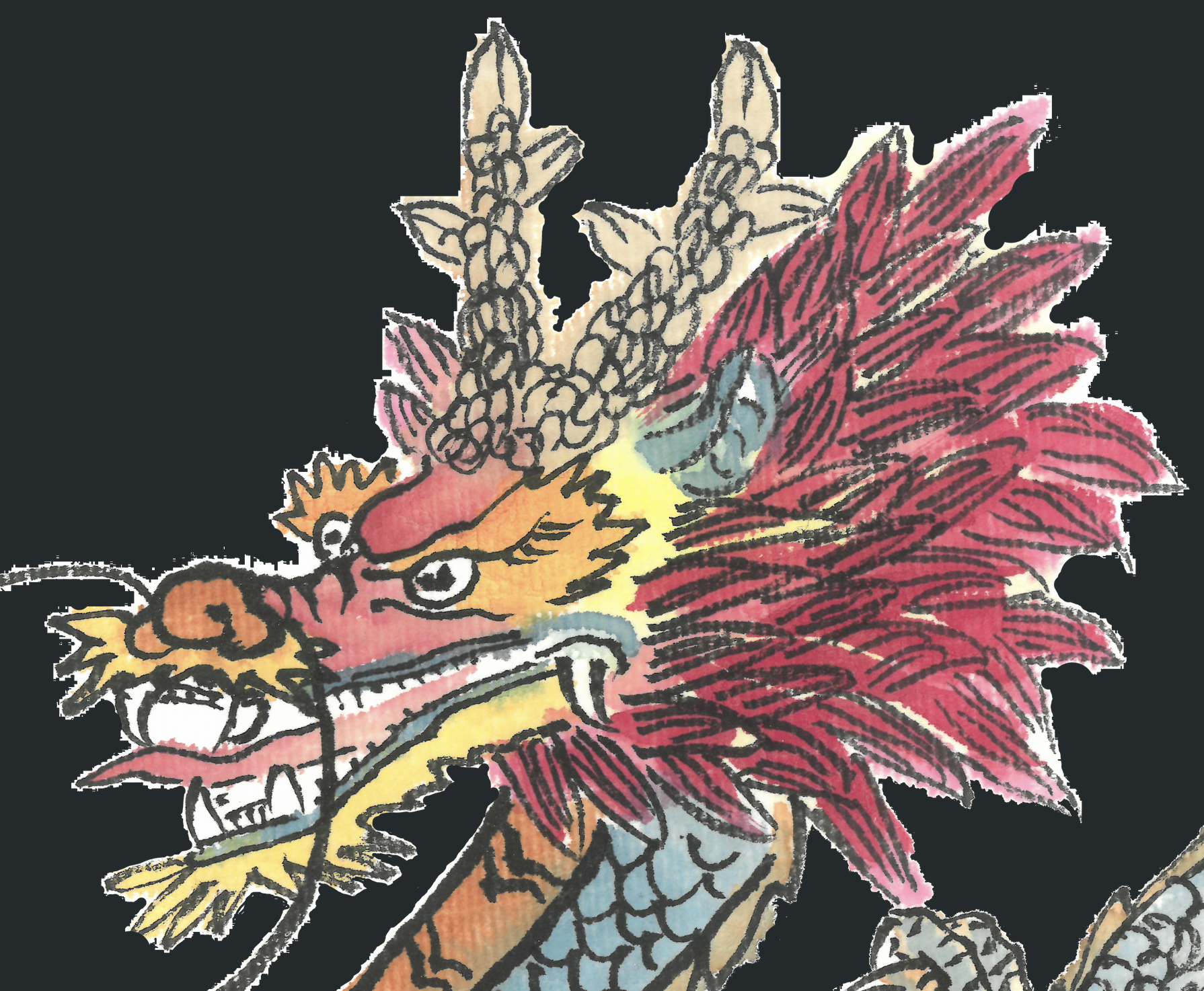
Head detail: the horns, head, eyes and ears are four of the traditional nine resemblances.
Follow the curve downward and the neck resembles a snake. Along the body are the overlapping scales of a carp, while the belly is compared to a shen (蜃), a creature traditionally described as a giant clam and associated with mirages.
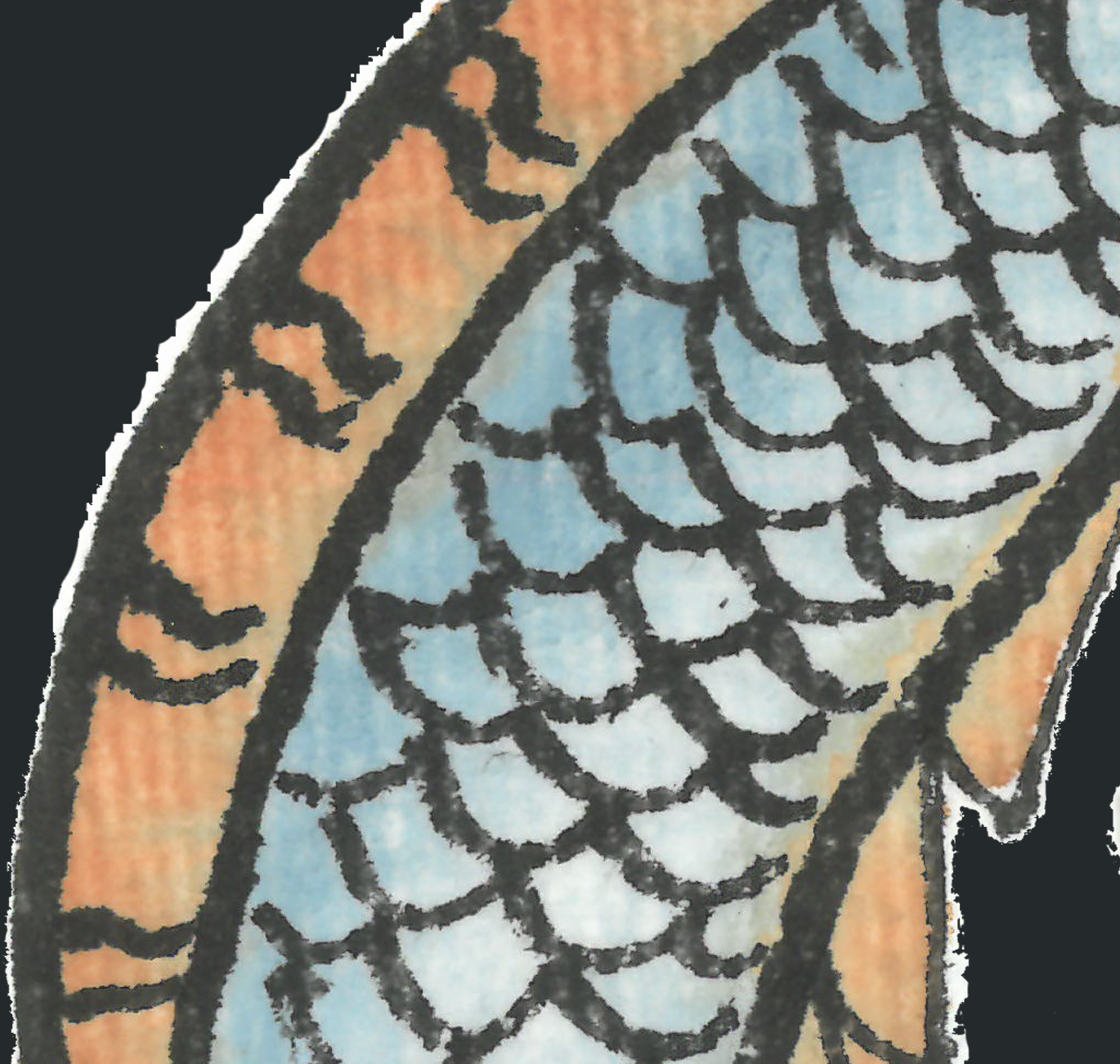
The curving neck, overlapping scales and contrasting underside.
The feet bring two animals together. The broad paws resemble a tiger’s, ending in the hooked claws of an eagle. A single limb combines the weight of one animal with the sharpness of another. [Source for the comparisons: Bencao Gangmu, vol. 43, “Dragon.”]
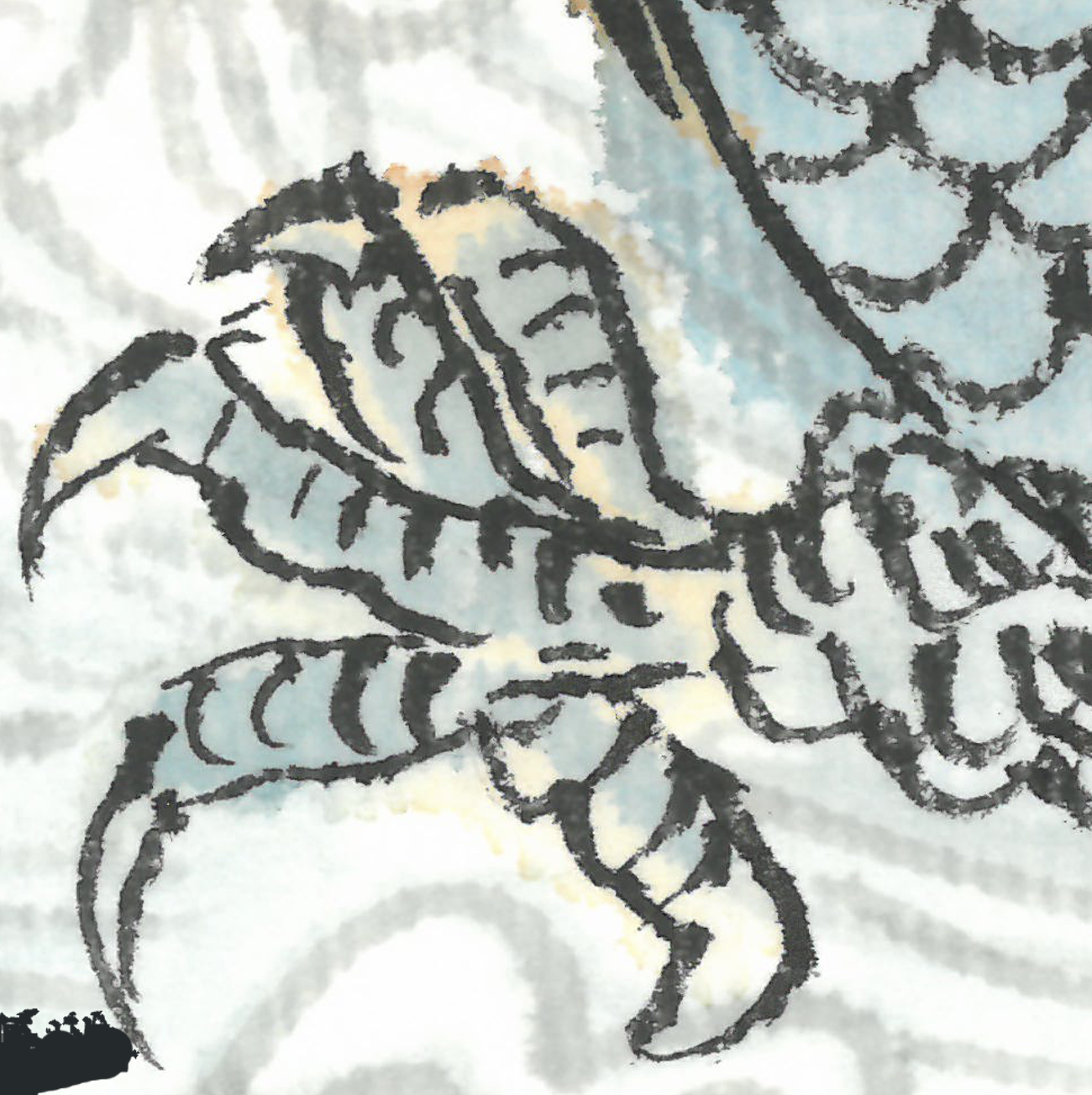
The paw and its hooked claws combine two separate animal comparisons.
These resemblances give us a way to look more closely at dragon paintings. Across different artists and periods, the proportions and details change, while the creature remains recognisable.
Why does it represent good fortune?
With its teeth, horns and claws, the dragon hardly looks gentle. Yet in China, people prayed to dragons for rain. [Source: Smithsonian National Museum of Asian Art, “Dragon Dance.”]
Dragons were believed to inhabit rivers, lakes and seas and to command the rain. For farming communities, timely rain meant crops could grow and families could eat. This connection with water helps explain the dragon’s associations with abundance and good fortune. [Sources for rain and auspicious associations: Smithsonian National Museum of Asian Art, “Eleven Dragons” and “Dragon Dance.”]
Dragons could also be fearsome, so their power was approached with both hope and respect. [Source: Erya Yi, vol. 28, “Dragon,” describing fierce temperament and violent rain.]
Its power also made it an emblem of imperial authority. But the dragon belonged to everyday hopes as well. The expression 望子成龙, literally “hoping one’s son becomes a dragon,” expresses a parent’s wish for a child to achieve great things.
Many familiar European legends place a dragon in the path of a hero who must defeat it. Chinese traditions often give the dragon a different role: a powerful being whose favour people seek. [Sources: British Museum, “Fantastic Beasts and Where to Find Them”; Smithsonian National Museum of Asian Art, “Dragon Dance.”]
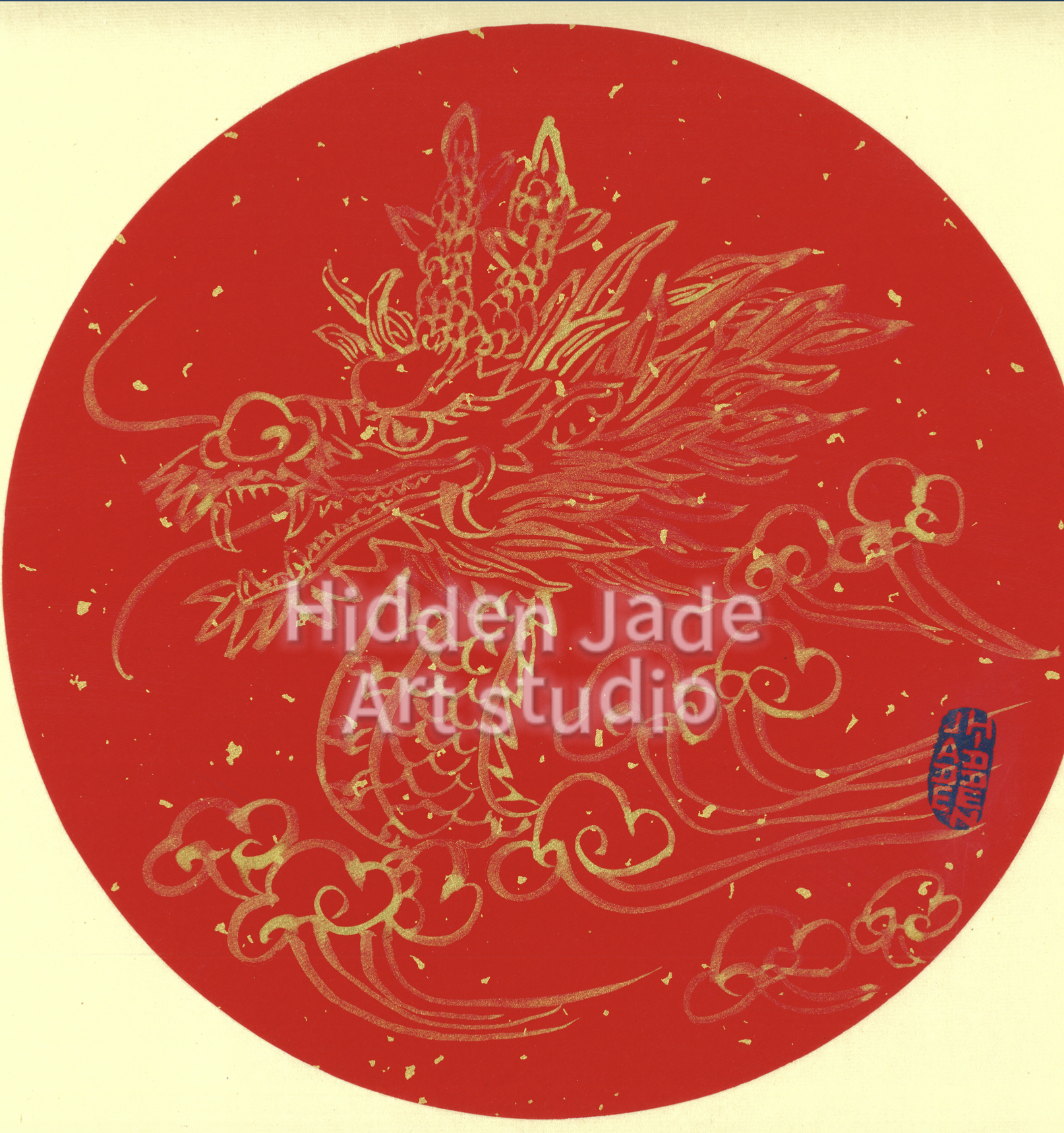
Golden Dragon —a golden dragon among curling clouds on a red circular background. Explore Golden Dragon : [Digital download] · [Physical print]
The clouds around it
The curling clouds surrounding dragons carry meaning too. 祥云 (xiángyún) means “auspicious clouds,”associated with peace and good fortune. Beside a dragon, clouds also recall its connection with the sky and rain.
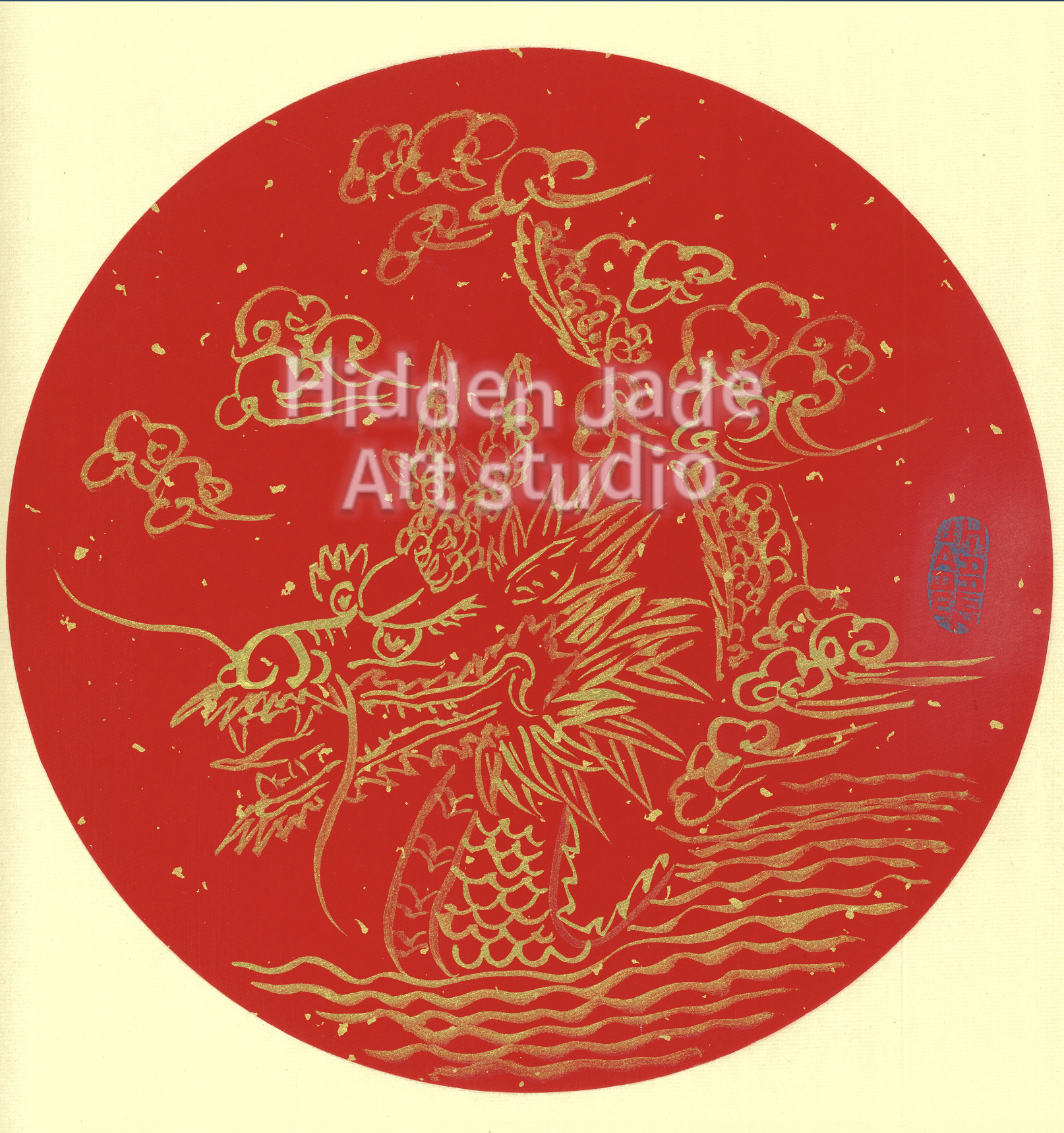
Golden Dragon with Clouds — curling clouds surround the dragon, with waves beneath it.
The next time you look at one of our dragon paintings, follow the antlers, scales and claws, then notice the clouds around them. These details carry a long history of imagining power—and hoping that power will bring something good.
